
Shaker cabinets, farmhouse sinks, subway tiles – they’re lovely, but they’re not quite you. What you want is something cleaner, more streamlined. Something that feels current without being cold.
That’s contemporary kitchen design in a nutshell. It’s the kitchen style that refuses to be pinned down to one era or aesthetic, instead pulling the best elements from multiple design movements to create something genuinely livable for right now. And if you’re planning a kitchen renovation in Melbourne, understanding contemporary design will help you create a space that works beautifully for years to come.
Quick Answer:
- Contemporary vs modern: Contemporary is “of the moment” and evolving; modern refers to a specific mid-century design movement
- Key features: Clean lines, handleless cabinetry, mixed materials, neutral palettes with bold accents
- Focus: Function first, with style that adapts to current trends
- Popular in Australia: Open-plan integration, natural materials, two-tone cabinetry, smart storage
What Actually Makes a Kitchen Contemporary?
Here’s the thing people get wrong: contemporary and modern aren’t the same thing.
Modern kitchen design refers to a specific mid-century aesthetic – think 1950s-1970s clean lines, geometric forms, and that “less is more” philosophy. It’s rooted in a particular era and style.
Contemporary kitchen design? That’s what’s happening right now. It’s fluid, evolving, and borrows elements from multiple styles – modern, industrial, Scandinavian, even traditional touches when they work. What makes a kitchen contemporary isn’t strict adherence to rules, but rather a thoughtful blend of current trends with timeless functionality.
In Melbourne homes, contemporary kitchen design often means open-plan living, abundant natural light, and materials that suit our climate and lifestyle. It’s sophisticated without being stuffy, minimal without being stark, and functional without sacrificing beauty.

Clean Lines and Minimalist Aesthetics
If contemporary kitchen design had a mantra, it’d be “intentional simplicity.”
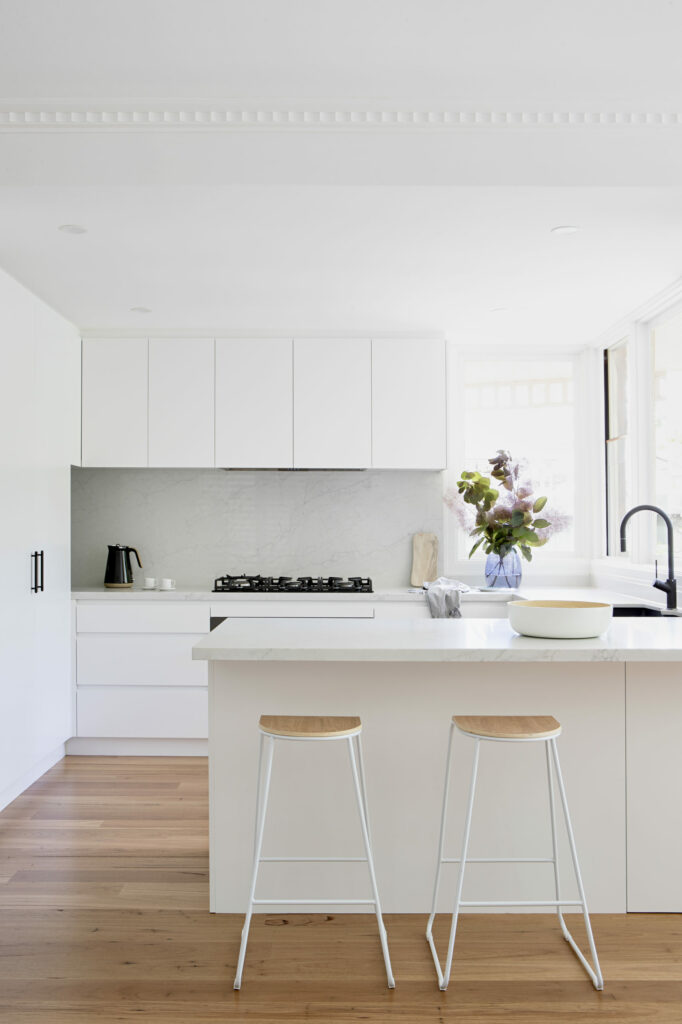
Every element serves a purpose. You won’t find decorative cornices or ornate mouldings here. Instead, contemporary kitchens embrace smooth surfaces, horizontal lines, and a general lack of fuss. But don’t mistake minimal for boring – the beauty comes from quality materials, perfect proportions, and thoughtful details.
Handleless cabinetry defines contemporary style. Push-to-open mechanisms or integrated finger pulls create that seamless, uninterrupted look that’s become synonymous with contemporary design. No protruding handles means cleaner lines and easier cleaning (no catching your clothes on cabinet knobs when you’re rushing around).
Flat-panel or slab-style cabinet doors are another hallmark. These simple, smooth doors create visual calm and let other elements – like a stunning stone benchtop or statement lighting – take centre stage. The simplicity is the point.
Open shelving mixed with closed storage adds visual interest without clutter. A few floating shelves displaying beautiful ceramics or glassware break up the solid cabinetry while keeping the overall aesthetic clean and considered.
Materials and Finishes That Matter
Contemporary kitchens are tactile. You’ll see matte and high-gloss finishes living side by side, natural timber paired with industrial concrete, warm brass next to cool stone. It’s this thoughtful mixing of materials that prevents contemporary design from feeling cold or sterile.
Benchtops
Quartz dominates contemporary kitchens for good reason. It’s non-porous, durable, and comes in everything from marble-look slabs to solid colours. Porcelain is also gaining ground – it’s heat-resistant, scratch-proof, and can mimic natural stone beautifully. For warmth, some homeowners choose natural stone like granite or marble, accepting the maintenance trade-off for that authentic, one-of-a-kind look.
Cabinetry Finishes
Both matte and high-gloss work in contemporary kitchens, depending on the vibe you want. Matte finishes feel sophisticated and hide fingerprints beautifully – perfect for busy families. High-gloss reflects light and makes spaces feel larger and brighter, though they show every smudge.
Mixed Metals
Matchy-matchy hardware is out. Contemporary kitchens embrace mixed metal finishes – brushed brass tapware with matte black handles, or brushed nickel with copper pendant lights. The key is choosing metals that complement each other rather than compete.
Large-format tiles: Whether it’s for flooring or backsplashes, bigger tiles mean fewer grout lines and a cleaner, more seamless look. Think 600x600mm or even 900x900mm porcelain tiles in stone or concrete finishes.
Statement Backsplashes
While many contemporary kitchens extend the benchtop material up the wall for a seamless look, others make the splashback a focal point. Geometric tiles, textured stone, or even bold-coloured glass panels add personality without overwhelming the space. Want to go even more minimal? Choose a polished plaster splashback or range hood for a luxurious, grout-free and durable option.
Layout and Functionality
Contemporary kitchen design prioritises how you actually live and cook.
- Open-plan integration: Most contemporary kitchens flow seamlessly into living and dining areas. This isn’t just aesthetic – it’s practical for Australian lifestyles where entertaining and family time often centre around the kitchen. The key is creating visual cohesion between spaces through consistent materials and colour palettes.
- Islands as focal points: The kitchen island has evolved from optional extra to absolute centrepiece in contemporary design. It’s where people gather, where kids do homework, where you serve drinks during parties. Contemporary islands often feature waterfall edges (where the benchtop material cascades down the sides), integrated seating, and hidden storage.
- Zoning: Smart contemporary kitchens create distinct zones for cooking, prep, and socialising. The cooking zone clusters your cooktop, oven, and rangehood. The prep zone includes your sink, dishwasher, and bin. The social zone (often the island) is where people perch with coffee while you’re cooking.
- Hidden pantries and butler’s pantries: These are massive in contemporary Australian kitchens. A butler’s pantry – essentially a back-of-house prep kitchen – lets you hide the mess of cooking while keeping your main kitchen pristine for guests. Walk-in pantries with floor-to-ceiling shelving maximise storage without visible clutter.
- Smart storage solutions: Pull-out pantries, corner carousel units, deep drawers for pots and pans, integrated bin systems – contemporary design is obsessed with making every centimetre work harder. The goal is accessibility and organisation without visual chaos.
Technology and Innovation
Contemporary kitchens embrace smart technology without looking like spaceship control panels.
- Smart appliances: Fridges you can control from your phone, ovens that suggest recipes based on what’s inside them, dishwashers that auto-dose detergent – these features are becoming standard rather than luxury in contemporary design.
- Integrated charging stations: Built-in USB ports in islands, pop-up power outlets in benchtops, or dedicated charging drawers keep devices powered without cables cluttering your beautiful surfaces.
- Touch-activated taps: Wave your hand to turn water on and off – brilliant when your hands are covered in raw chicken or pastry dough. It’s hygienic, water-efficient, and genuinely useful.
- Induction cooktops: These are dominating contemporary Australian kitchens. They’re faster than gas, easier to clean than electric, energy-efficient, and create that seamless, flush surface that contemporary design loves.
- Integrated appliances: Hide your fridge, dishwasher, even your bin behind cabinetry fronts for that furniture-like appearance. Everything’s still accessible and functional, just visually quieter.
The Sustainability Angle
Contemporary design increasingly means responsible design.
- Energy-efficient appliances: High-star-rated fridges, dishwashers, and ovens aren’t just good for the planet – they genuinely save money on bills. Contemporary kitchens prioritise performance and efficiency over flashy features that’ll never get used.
- Sustainable materials: Recycled glass benchtops, FSC-certified timber cabinetry, low-VOC paints and finishes – these choices improve indoor air quality and reduce environmental impact. Many contemporary Australian kitchens now specify locally sourced materials to reduce transportation emissions.
- LED lighting throughout: Uses 75% less energy than traditional lighting and lasts years longer. The upfront cost is negligible compared to long-term savings.
- Water-saving fixtures: Taps with aerators reduce water consumption without sacrificing pressure. In a country that knows drought, this just makes sense.
Making Contemporary Work for You
The beauty of contemporary kitchen design is its flexibility. You’re not locked into strict rules or one particular look. Instead, you’re free to choose elements that genuinely suit your lifestyle, budget, and aesthetic preferences.
Love the clean lines, but want warmth? Incorporate timber. Need serious storage but want minimal aesthetics? Invest in smart hidden solutions. Want colour but don’t want to commit? Use it in changeable elements like bar stools or artwork.
A well-designed contemporary kitchen adapts to how you actually live. It’s not about impressing guests or looking magazine-perfect – though it’ll probably do both. It’s about creating a functional, beautiful space that makes daily life genuinely easier and more enjoyable.
Whether you’re after a full kitchen renovation or just looking to update your current space with contemporary elements, start with function and let style follow. Think about your cooking habits, storage needs, and how you entertain. Then choose materials, colours, and features that serve those needs while reflecting your personal aesthetic.
Contemporary kitchen design isn’t a fleeting trend – it’s an approach that evolves with how we actually live. And that’s what makes it enduringly appealing.